“Regulators Are Being Asked to Slow Down the Pace”: Muinmos Founder on AI and ESMA Guidance

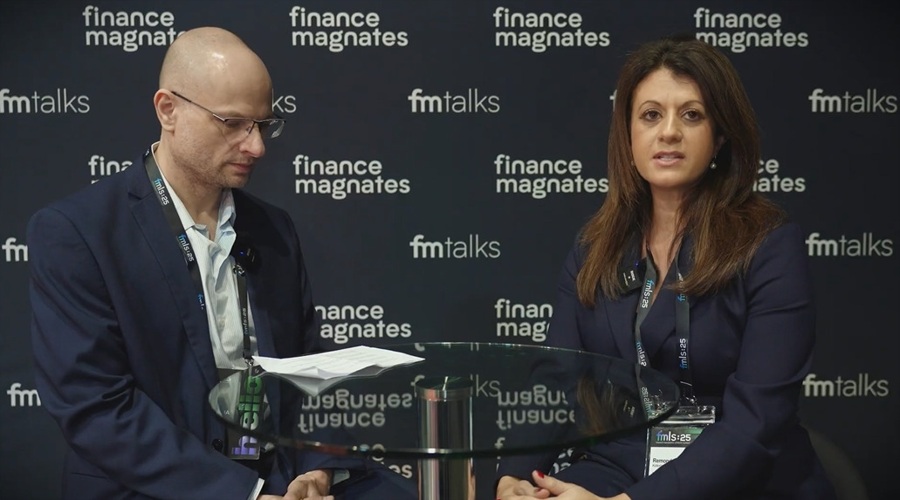
“AI is a hot topic, but boards must understand what they are getting into,” said Remonda Z. Kirketerp Møller, founder of Muinmos, speaking at the Finance Magnates London Summit 2025.
In an interview with Finance Magnates Editor in Chief Yam Yehoshua, she shared a measured view of artificial intelligence adoption in regulatory technology, outlining both its potential value and the risks it poses for brokers and financial institutions.
AI Use in Compliance Raises Accountability and Onboarding Concerns
Møller said many firms are eager to introduce AI into compliance functions without fully understanding the operational and regulatory implications. “Its usability, accuracy, and accountability are fundamental in compliance,” she said, adding that weak implementation can result in financial burdens, regulatory fines, reputational damage, and interruptions to client onboarding.
[#highlighted-links#]
Founded in 2012, Muinmos was established following its founder’s early concept for an automated system to assess whether financial institutions can onboard clients in line with regulatory requirements. The company develops a SaaS-based regtech platform that uses automation, including AI and machine learning, to support client onboarding and compliance processes across multiple jurisdictions.
Automation Often Mistaken for Artificial Intelligence
Møller described the current level of AI maturity in the industry as limited. “A lot of companies talk about AI, but mostly they mean automation,” Møller said. She emphasized that decision-making responsibility cannot be delegated to technology. “The final decision-making must sit with the institution, which retains responsibility and accountability,” she noted.
According to Møller, client onboarding is one of the areas where AI can offer near-term benefits, particularly through process support and efficiency gains. However, she said such systems should operate with defined controls and under human oversight, rather than functioning as fully autonomous decision-makers.
AI Dialogue Grows Amid Licensing Uncertainty
The discussion also addressed regulatory engagement with AI. Møller observed that regulators are increasingly open to dialogue, including inviting regtech firms into regulatory sandboxes.
Despite this, she said many firms continue to operate in fragmented ways. “There is still a gap between using AI and understanding the regulatory framework,” she said, stressing that compliance considerations must remain central as AI tools are applied across business functions.
On licensing trends in Europe, Møller pointed to recent approvals granted to firms such as Revolut and eToro by CySEC as signs of regulatory progress. At the same time, she highlighted ongoing uncertainty around passporting within the European Union. “Even if authorities are ready, some regulators are being asked to slow down the pace,” she said, referring to guidance issued by ESMA.
Regtech Sees Controlled Shift to Automation
Looking ahead, Møller said client lifecycle management is likely to move toward greater straight-through processing supported by AI. “The future of onboarding is very little human touch, managed through AI—but with the right controls and risk framework,” she said.
The discussion highlighted a central tension in regtech today: AI offers efficiency and compliance gains, but its responsible implementation requires careful oversight, regulatory collaboration, and an appreciation of its limitations. For brokers and investment firms, the message is clear: embrace AI, but do so deliberately.

 Copy Link
 Share on Facebook
 Share on X
 Share by Email