“MENA’s Digital Banking Challenge Isn’t Demand; It’s the Restrictive Infrastructure,” Fintech Consultant Jas Shah at FMLS:25

“Make sure you know what's on their roadmap so that you know what you need to prep for and what you need to build,” commented fintech strategist Jas Shah when asked about the ideal stablecoin strategy for brokers during the FMLS:25.
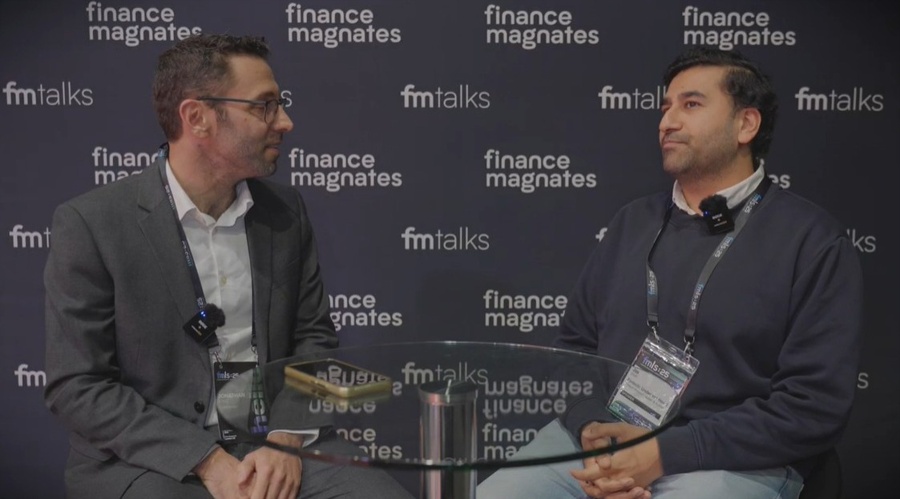
Shah—a consultant, writer, and frequent provocateur in the digital finance space— spoke with Jonathan Fine, Content Strategist at the Ultimate Group, offering a lucid view of an industry at a crossroads: technologically agile, but structurally uneven.
He brought candor and depth to a conversation that spanned artificial intelligence, stablecoins, and the ongoing transformation of digital banking.
Shah has spent nearly two decades building products in financial services, beginning his career as an engineer before focusing primarily on product leadership.
[#highlighted-links#]
Over this time, he has worked at tier 1 financial institutions, helped launch challenger banks and PFM apps, scaled an SME lender as Chief Product Officer, and continues to advise and provide hands-on expertise to organizations developing innovative products. He is also a columnist at Fintech Under the Hood, an online publication with over 6000 subscribers.
Building Digital Banking in MENA
Much of Shah’s current work, he revealed, revolves around digital transformation projects in the Middle East, particularly the challenge of modernizing user experience and payments infrastructure as banks race to engage younger generations. Shah noted that much of his current work focuses on the MENA region, particularly on advancing digital banking initiatives.
Many banks there are striving to attract younger customers, which requires transitioning from traditional internet banking to fully developed mobile banking experiences — a shift that’s already commonplace elsewhere but still in progress across the region.
“Speak to retail clients, introduce your clients. I mean, even get them into a room, take them out for dinner, chat to them and say, look, what are your challenges? What do you know about stable coin? What are you interested in doing? What are you thinking about for next year?”
“Okay, we've got this offering ready to go. Let's talk about how we can embed it. So, it's really getting the customer feedback and speaking to the customers directly.”
Stablecoins and the Regulations
The conversation then turned to stablecoins—a topic that dominated whispers across the Summit—and how brokers should approach this evolving space. Shah’s advice was pragmatic: start from first principles.
“You need to know what your customers are doing,” he said. “Even get them in a room, take them out for dinner, and ask: What do you know about stablecoins? What are your challenges? What are you thinking about for next year? Then you can build something meaningful around that.”
Yet optimism was tempered by realism. Regulation, particularly around KYC, AML, and fund segregation, remains murky. “It’s still a challenge,” he acknowledged. “But I think the more adoption that happens, the more regulation will fit around what use cases are across industry. Yeah, we will wait for clarity. Wait-and-see.”
The Convergence of Banking, Investing and Fintech
Perhaps the most forward-looking part of the discussion explored the convergence between neobanks and retail investing—a theme Fine noted as central to the Summit’s evolution. Shah pointed to Revolut as emblematic of this shift, citing its growth, regulatory licenses, and product strategy.
You may also like: “Prop Isn’t Finished, but If You’re Coming into Prop Now, You Are,” FMLS:25 Takeaways
“Nick approaches product like a finance person with a tech lens,” said Shah. “I think Revolut maybe will become a bigger part of this conference. But I think they're talking about launching their own real estate investing platform for institutional investors plus retail investors.”
He suggested that leading digital banks—from Monzo to Starling—will eventually internalize their trading and investment tech stacks, transforming from platform customers into “investment-as-a-service” providers. “And once they've built the tech, they can license the tech and come here as a, you know, investment as a service platform like many of the people here.”
Writing Fintech, From Insight to Art
In a lighter turn, Fine lauded Shah’s long-form writing, particularly his widely read Fintech Under the Hood essays. Asked about his process, Shah described something closer to an artisan’s craft than a journalist’s workflow.
“It meanders,” he admitted with a laugh. “I start with what people should know—what’s happening that isn’t being talked about. Then I layer structure: intro, background, timeline, closeout. And then I add the meat.”
Shah’s reflections encapsulated a wider narrative running through the Summit halls: fintech is no longer a sideshow to retail investing. It is becoming its infrastructure. As regulation catches up and neobanks mature, a new generation of digital finance builders is quietly turning from disruption to construction.

 Copy Link
 Share on Facebook
 Share on X
 Share by Email