Vietnam Busts $200M Forex Trading Scam: Will It Trigger Action Against CFD Brokers Too?

Offshore forex and contracts for difference (CFD) brokers are investing heavily to capture the Vietnamese market. They are running extensive ads on online platforms, hiring country managers for Vietnam, and some are even opening local representative offices. However, their activities in the country are in the grey area, if not outright illegal.
Get the highlights from FMLS25.
Vietnamese authorities, meanwhile, appear to have started cracking down on forex trading frauds, which are expected to have duped investors in the tune of hundreds of millions of dollars.
Vietnam has tight currency controls in place. Banks typically emphasise the traceability of funds sent abroad, which are only allowed for certain purposes - margin trading is not one of them. Furthermore, online retail margin forex trading is not permitted and, legally, only State Bank of Vietnam (SBV)-licensed institutions can conduct foreign exchange trading and derivatives.
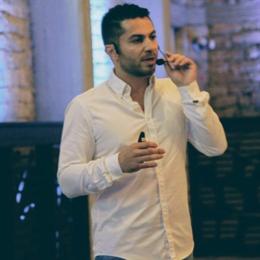
"Vietnam has no retail licence for online OTC CFDs/FX, retail derivatives are mainly on-exchange. Offshore CFD/FX serving Vietnam are not locally licensed," pointed out Nikolas Xenofontos, Managing Director at SALVUS Funds.
However, this does not mean there is no demand for forex. Old-school savers in the country lines up in front of gold shops, in other words, black markets, when there is a significant movement of the dong against other top global currencies, mostly the US dollar.
Fraudsters, and also offshore brokers, are riding on this sentiment to push Vietnamese traders to trade forex and CFDs.
[#highlighted-links#]
Busting Mr Pips and Mr Hunter
The systemic crackdown by the Vietnamese authorities on illegal forex trading platforms began in the past few years.
The noticeable action came in mid-2021 when the police in Hanoi and Ho Chi Minh City busted four illegal forex, gold, and cryptocurrency trading exchanges, namely Rforex.com, Yaibroker, Vistaforex, and Exswiss. According to local reports, these platforms operated their services on MetaTrader 5 to attract nearly 12,000 participants from 27 countries and regions, duping them out of roughly $4.3 million.
Then came the collapse of the FXTradingMarkets and UKtrade binary options platforms, both of which operated under the guise of being London-based firms. Busstrade is another such platform, offering returns of up to 30 per cent per month, against which the Vietnam police opened a criminal investigation.
However, the most headline-grabbing bust by the Vietnamese police has been against Pho Duc Nam and Le Khac Ngo, also known as Mr Pips and Mr Hunter, respectively. It is said to be Vietnam’s largest illegal forex trading fraud case, involving losses of more than 5,200 billion Vietnamese dong (over $197 million).
Mr.Hunter bị bắt với Mr Pips Phó Đức Nam trong vụ lừa đảo tài chính 5.000 tỉ là ai?
— South of Vietnam (@vincent31473580) December 7, 2024
Trước khi bị khởi tố, Mr. Hunter được xây dựng với hình ảnh một nhà đầu tư tự do thành công và chuyên gia tài chính nổi tiếng trên TikTok, YouTube... pic.twitter.com/ZmmNHyHlGV
Mr Pips was arrested by Vietnamese police last December, while his primary accomplice, Mr Hunter, was arrested in the Philippines recently. The Vietnamese authorities are now proceeding with the extradition efforts for Mr Hunter, who, according to legal experts, may face a life sentence. They also collaborated with a Turkish national based in Cambodia.
The scale of the operations run by Mr Pips and Mr Hunter was so large that it involved the establishment of several shell companies in Vietnam, along with dozens of representative offices.
They carried out the operations primarily using five domains – Alpha.com, Gtmx.com, Btfx.com, Enzofx.com, and Gkfx.com – with English interfaces, creating the illusion that these platforms were operated internationally. Like other platforms, these platforms also used MetaTrader 4 and MetaTrader 5.
A Warning Shot for the Offshore CFD Brokers?
Vietnam, like many other countries in the region, is a tricky country for offshore CFD brokers to operate in. A population of over 100 million, however, makes it a highly lucrative market.
Although forex trading scammers cannot be compared to offshore-licensed CFD brokers, the industry is showing restraint when it comes to publicly disclosing its local presence.
Most onboarding in Vietnam is conducted through affiliates and introducing brokers.
There are no visible actions against offshore CFD brokers, however, the authorities are aware of their operations. The Vietnamese police have issued warnings against online forex trading as well.
The most noted action came when Exness, a major CFD broker, had its local Vietnamese domain blocked by the Vietnam Internet Network Information Centre (VNNIC) at the request of the police. Although it still operates in the country, it no longer uses a local .vn domain. Offering forex trading from offshore is not outright illegal in Vietnam.
Although the focus of the Vietnamese authorities is currently on scammers, offshore brokers also appear to be very cautious in this market. FinanceMagnates.com understands that many brokers with representative offices in the country prefer not to disclose their locations.
A one-day forex trading expo in Ho Chi Minh City last year was also abruptly cancelled without any proper notification from the organisers.
There is no doubt about the potential of the Vietnamese market and the brokers’ urge to capture a piece of it. However, whether this Southeast Asian country will become another India, only time will tell.
India, another country where brokers operate under similar lack of laws, witnessed an exodus of multiple big CFD brands. The exits followed the Indian authorities' crackdown on a major broker brand due to money laundering charges.
"Recent large cases heighten legal and reputational risk for any firm seen as targeting consumers where local rules are unclear," Xenofontos added. "Expect continued enforcement, in waves tied to fraud cases, rather than a near-term crackdown."

 Copy Link
 Share on Facebook
 Share on X
 Share by Email