New CFTC Chief Previously Led SEC's Crypto Task Force - A Clear Signal to Markets

Michael Selig was sworn in Sunday as the 16th chairman of the Commodity Futures Trading Commission (CFTC), filling a leadership void left by Caroline Pham's departure after her brief but consequential stint as acting chair.
Selig's arrival marks a shift at the derivatives regulator just as Congress prepares to hand it broader powers over crypto markets. The Senate confirmed his nomination last Wednesday following President Donald Trump's October pick for the role.
"We are at a unique moment as a wide range of novel technologies, products, and platforms are emerging, retail participation in the commodity markets is at an all-time high, and Congress is poised to send digital asset market structure legislation to the President's desk," Selig said after taking the oath.
From SEC Crypto Task Force to CFTC Leadership
Selig comes to the CFTC after serving as chief counsel of the Securities and Exchange Commission's (SEC) Crypto Task Force under SEC Chairman Paul Atkins. In that role, he worked on aligning SEC and CFTC oversight of digital assets and participated in the President's Working Group on Digital Asset Markets.
[#highlighted-links#]
Before joining the government, Selig spent years in private practice representing futures commission merchants, swap dealers, exchanges, and crypto firms, navigating CFTC regulations. He holds a law degree from George Washington University and an undergraduate degree from Florida State University.
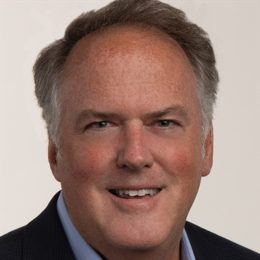
Thomas Sexton, president and CEO of the National Futures Association, welcomed the appointment. "Mr. Selig's prior service at the CFTC and SEC along with his private sector experience will serve the CFTC extremely well," Sexton said.
Pham's Push for Market Innovation and Regulatory Clarity
Pham, who took over as acting chair in January, leaves behind a year marked by regulatory experimentation and internal reforms. She championed prediction markets, tokenized assets, approved perpetual futures contracts, and greenlit round-the-clock trading on CFTC-registered exchanges.
Her tenure included launching a "Crypto Sprint" that resulted in listed spot crypto trading on futures exchanges, a digital asset markets pilot program, and guidance on tokenized collateral. She also convened a CEO Crypto Forum and created a CEO Innovation Council.
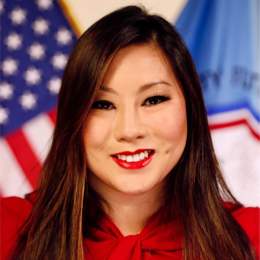
"It has been the honor of a lifetime to lead the CFTC during such a historic moment for market structure and innovation," Pham said in her departure statement Sunday.
Beyond crypto, Pham implemented the CFTC's first automated market surveillance system, which the agency said would save nearly $50 million annually. She also pushed through changes to self-reporting requirements in enforcement cases and launched a pilot program aimed at increasing liquidity in energy markets.
The acting chair wasn't without controversy. She drew attention last year for publicly criticizing the CFTC's enforcement division over its handling of the MyForexFunds case, alleging staff misconduct. The case was later dismissed.
New Team Member for Digital Assets Advisory
In one of her final acts as acting Chairwoman, Pham has announced that Rob Hadick of Dragonfly Capital Partners joined the Global Markets Advisory Committee's Digital Asset Markets Subcommittee. Hadick focuses on digital asset investment strategy and blockchain-based financial systems at the venture firm.
Pham is headed to crypto payments company MoonPay as Chief Legal Officer, the company confirmed last week. She was unanimously confirmed as a commissioner in April 2022 before being tapped as acting Chairwoman at the start of Trump's second term.
Selig now inherits an agency preparing for what could be its biggest expansion in years if Congress passes digital asset legislation. His emphasis on "commonsense rules" and ending "regulation by enforcement" aligns with the administration's broader push to position the United States as what Trump has called the "Crypto Capital of the World."

 Copy Link
 Share on Facebook
 Share on X
 Share by Email