Dow Jones Industrial Average gains 420 points as rate cut hopes climb

- The Dow Jones tipped back into the bullish side on Wednesday.
- Equities caught an early dip after ADP jobs and AI-based sales targets both missed.
- Weak jobs figures, despite their volatile origin, are sparking fresh bets of a December rate cut.
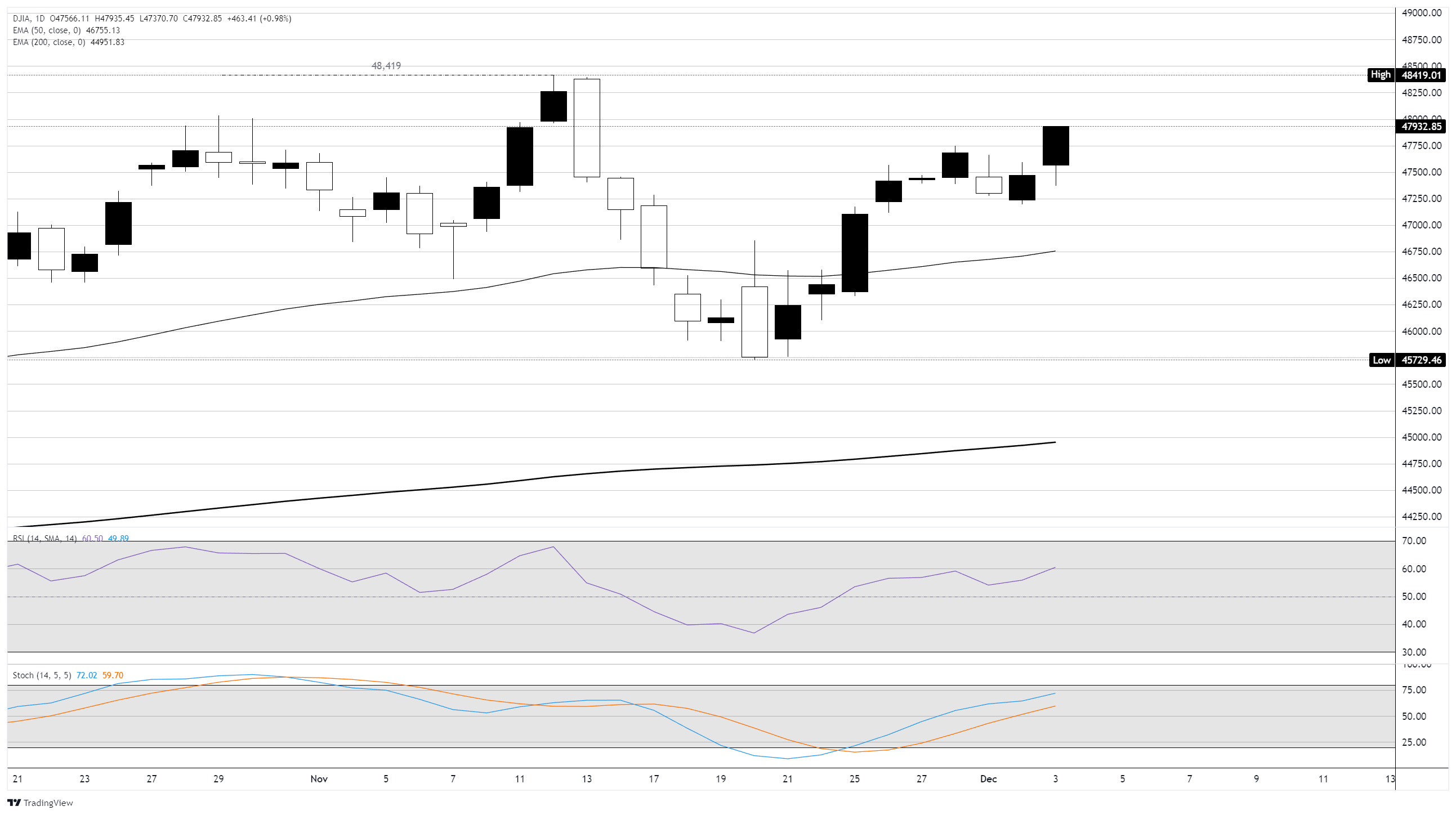
The Dow Jones Industrial Average (DJIA) rose 420 points on Wednesday, sparked by renewed market optimism that the US economy is performing so poorly that the Federal Reserve (Fed) will be forced to deliver a third straight interest rate cut in December. Equities caught a bearish tilt earlier in the day after a sharp contraction in ADP jobs figures and downside revisions for Microsoft’s (MSFT) AI-focused sales divisions delivered a sharp one-two punch to stock traders. However, the glimmer of another quarter-point interest rate cut in the face of a crumbling labor market stoked bullish sentiment heading through the midweek market session.
US private jobs data sinks again, bolsters rate cut bets
ADP Employment Change showed a 32K contraction in the net change in payrolled jobs through November, a sharp reversal from the previous month’s 47K output and well below the modest median forecast of 5K. ADP jobs data has remained volatile for years, struggling to maintain even a hint of a correlation to official datasets on a per-release basis. However, with official figures still delayed following the US government’s funding shutdown, markets and Fed officials have access to few other figures than private datapoints like sketchy jobs data from private payroll companies.
According to the CME’s FedWatch Tool, rate traders are now pricing in nearly 90% odds that the Fed will be pushed to deliver a third straight interest rate cut on December 10. Odds that the Fed might pull back from the brink and wait until January still sit high at 80%, but investors are tilting further into bets of a December rate trim as US jobs data continues to crumble.
US Industrial Production managed to eke out a 0.1% gain in September, however the march of back-dated revisions continues with the previous month’s figure slumping to -0.3%. S&P Global posted its latest Composite Purchasing Managers Index (PMI), which also showed a contraction in business expectations, with the aggregate index survey results falling to 54.2 from 54.8.
AI sales expectations continue to crash against the hard wall of reality
Multiple divisions within Microsoft that are associated with the tech giant’s AI ventures are lowering their sales expectations heading into the end of the year. Despite most of the AI segment declaring 2025 the year of the AI agent in the early months, the tone is quietly shifting lower inside companies that are struggling to hit lofty sales benchmarks as end-user demand for AI projects continues to run well below executives’ collective hopes and dreams. According to sources within Microsoft, sales quotas are getting lowered across the board on AI projects. It is allegedly rare for companies like Microsoft to lower sales targets, and it has highlighted how consumers and businesses are all growing increasingly resistant to paying more for attempts to automate the world with AI.
Microsoft shares tumbled 2.28% on the news, falling to a one-week low of $475.22 before staging a meager recovery back above $486 per share, but still ending down overall on the day.
Dow Jones daily chart
Interest rates FAQs
Interest rates are charged by financial institutions on loans to borrowers and are paid as interest to savers and depositors. They are influenced by base lending rates, which are set by central banks in response to changes in the economy. Central banks normally have a mandate to ensure price stability, which in most cases means targeting a core inflation rate of around 2%. If inflation falls below target the central bank may cut base lending rates, with a view to stimulating lending and boosting the economy. If inflation rises substantially above 2% it normally results in the central bank raising base lending rates in an attempt to lower inflation.
Higher interest rates generally help strengthen a country’s currency as they make it a more attractive place for global investors to park their money.
Higher interest rates overall weigh on the price of Gold because they increase the opportunity cost of holding Gold instead of investing in an interest-bearing asset or placing cash in the bank. If interest rates are high that usually pushes up the price of the US Dollar (USD), and since Gold is priced in Dollars, this has the effect of lowering the price of Gold.
The Fed funds rate is the overnight rate at which US banks lend to each other. It is the oft-quoted headline rate set by the Federal Reserve at its FOMC meetings. It is set as a range, for example 4.75%-5.00%, though the upper limit (in that case 5.00%) is the quoted figure. Market expectations for future Fed funds rate are tracked by the CME FedWatch tool, which shapes how many financial markets behave in anticipation of future Federal Reserve monetary policy decisions.

 Copy Link
 Share on Facebook
 Share on X
 Share by Email