$2.5 Trillion Trade Finance Gap Hits SMEs, Tokenization May Offer Solutions

The global trade finance gap reached $2.5 trillion in 2023, up nearly 50% from $1.7 trillion in 2020, according to the Asian Development Bank. Small and medium-sized enterprises in emerging markets are most affected, constrained by legacy infrastructure and fragmented credit assessment.
The challenge lies in operational friction rather than creditworthiness. Traditional trade finance relies on manual verification, siloed databases, and paper documentation, extending settlement cycles to 30–90 days. These inefficiencies create both constraints and opportunities for institutions expanding trade finance portfolios.
Tokenization Infrastructure
Asset tokenization has moved from pilot to production. Invoices, letters of credit, and receivables become digital tokens on distributed ledgers, enabling fractional ownership, programmable settlements, and secondary market liquidity.
Digital assets meet tradfi in London at the fmls25
[#highlighted-links#]
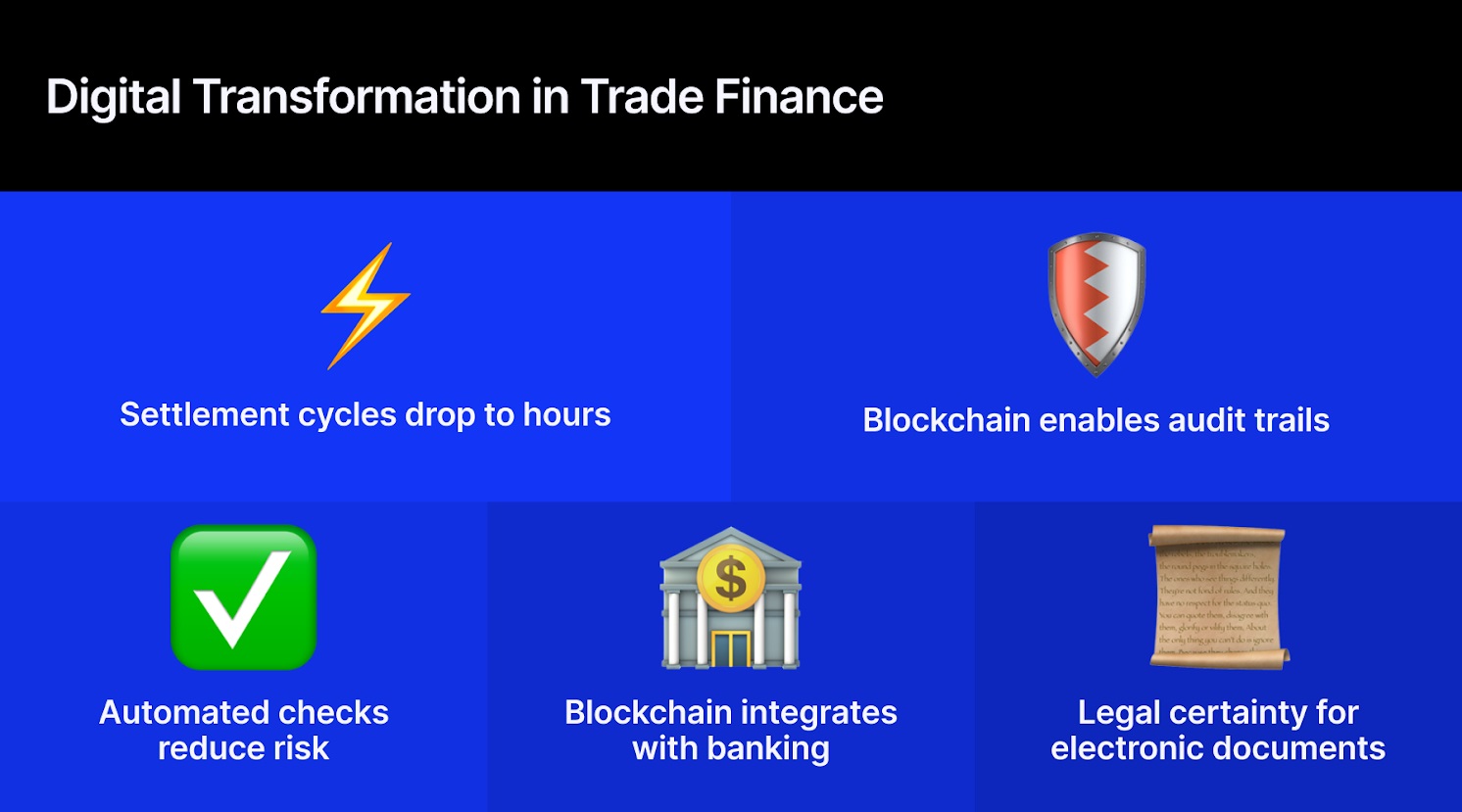
A $100,000 invoice can be split into 100 units of $1,000 each, broadening access to instruments previously limited to large counterparties. Settlement occurs in hours, removing costly intermediaries. Blockchain improves transparency, providing immutable audit trails, real-time collateral monitoring, and automated compliance checks.
ISO 20022 Compliance
Integration with ISO 20022 enables blockchain networks to exchange standardized financial data with SWIFT, RTGS, and correspondent banking systems. Platforms like XDC Network support instant settlement alongside traditional messaging, allowing incremental blockchain adoption without overhauling core systems.
By 2033, a $0.6T → $18.9T shift is coming as tokenization reshapes global finance.
— Ripple (@Ripple) April 7, 2025
Why?
🏛️ Regulation & institutional adoption
🏙️ Real-world assets like bonds & real estate
🔀 Faster, interoperable financial infrastructure
The institutions that act now will lead the next… pic.twitter.com/RjJcACzWm2
Regulatory Framework
MLETR adoption provides legal certainty for electronic trade documents. Jurisdictions including Singapore, the UK, France, Bahrain, and ADGM have enacted aligned legislation. The UK’s Electronic Trade Documents Act anticipates £1.14 billion in economic benefits over the next decade.
MLETR ensures digital instruments meet legal standards, solving the “double-spending” problem. Singapore’s adoption enabled successful cross-border transactions by 2023, reducing regulatory ambiguity for institutional investors.
Market Structure
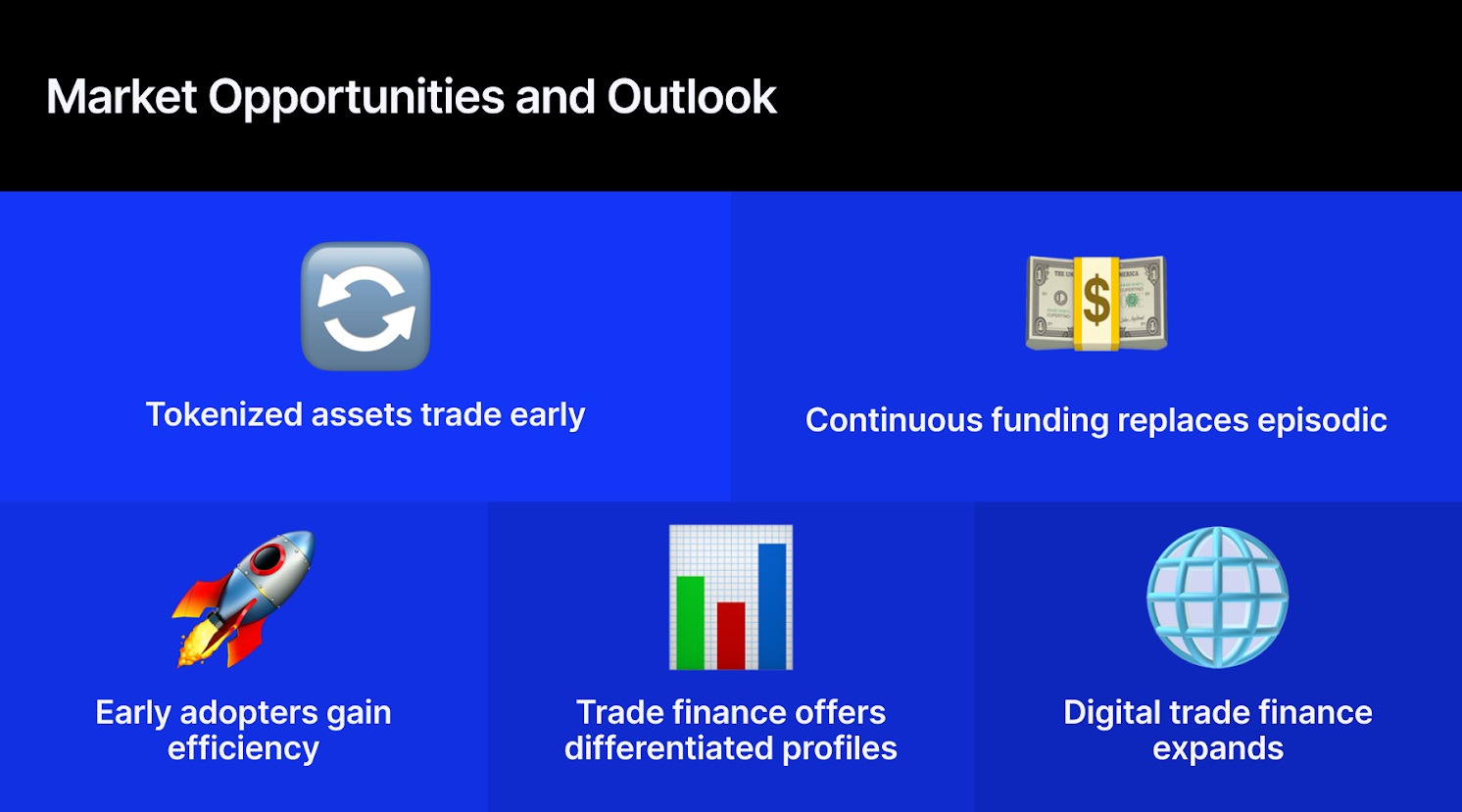
Secondary markets for tokenized trade assets allow portfolio rebalancing and continuous funding. Institutions gain exposure to real economic activity with collateral backing, offering differentiated risk-return profiles in low-yield environments.
Implementation Considerations
Financial institutions should prioritize ISO 20022 compatibility, MLETR-aligned jurisdictions, rigorous smart contract audits, and interoperability standards to manage technical and operational risks.
Q: Explain Tokenization and Blockchain in simple terms:
— Hello George (@george18kennedy) October 21, 2025
A: Tokenization** is the process of turning something valuable—like a physical asset (e.g., real estate, art) or a digital item (e.g., music rights, game items)—into a digital "token" on a computer system. Think of a token… pic.twitter.com/8ygwWkHT6B
Strategic Positioning
Early adoption provides lower transaction costs, faster settlements, and broader market access. Smaller banks can compete effectively by deploying infrastructure for targeted corridors or industries.
Market Outlook
The question has shifted from “whether” to “how” and “when.” Digital trade finance adoption will vary by market, but trends favor solutions that cut settlement times and broaden access. Tokenized trade instruments offer identifiable counterparties, underlying cash flows, and legal frameworks, providing near-term revenue and strategic positioning in global finance.

 Copy Link
 Share on Facebook
 Share on X
 Share by Email