Over a Billion Face Limited Financial Access, Peer-to-Peer Platforms Gain Importance

Access to financial services remains uneven across the globe, affecting how people move, spend, and manage money. While many in developed markets can rely on online banking, debit cards, or international e-wallets, over a billion people face frequent limitations in conducting basic transactions. This includes topping up accounts, paying for online services, or withdrawing funds.
Beyond Access: Quality and Context
Experts note that financial inclusion is not only about access but also about the quality and context of that access. Tools must operate effectively within local payment systems, support relevant currencies, and reflect how people actually transact in their daily lives.
Peer-to-Peer Systems
Peer-to-peer systems illustrate this point. Such platforms allow users to interact directly with each other, providing funding and withdrawal options that rely on familiar, trusted methods. In some regions, these systems are among the few reliable ways to connect to global financial markets.
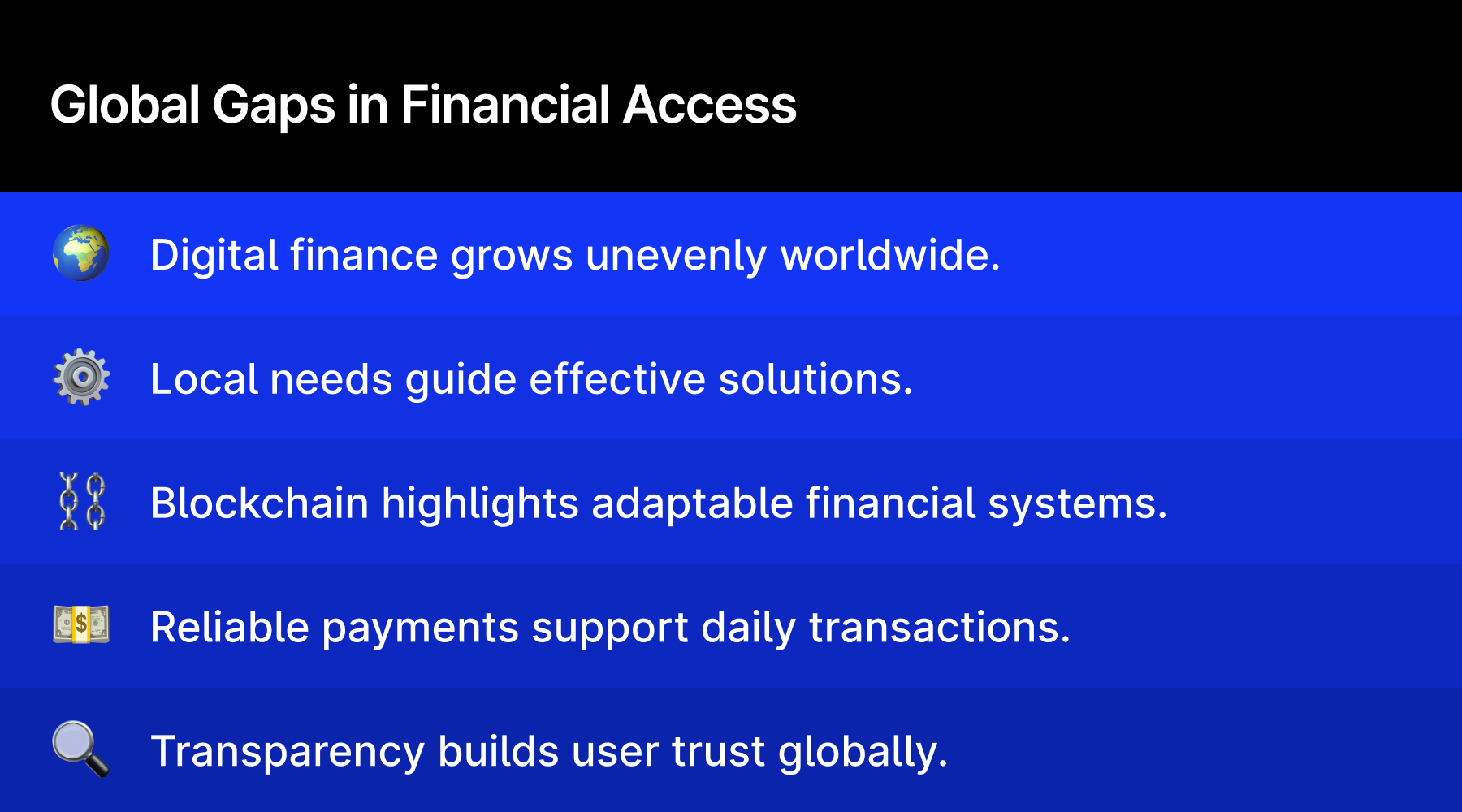
Local Needs Drive Adoption
Financial infrastructure varies widely by region. In many areas, digital infrastructure is expanding faster than formal banking systems. Traders in East Africa, for instance, rely on mobile money, while freelancers in South Asia face local currency restrictions. For these users, the most important tools are those that function dependably in their local context.
Ⓜ️#Litecoin ( $LTC) and Peer-to-Peer Payments: The Superior Nature of Cryptocurrency Compared to #PoS Coins 👇
— ALLDEX (@alldexone) August 14, 2025
1/🟧 What is the core purpose of cryptocurrency?
Cryptocurrency was created to fulfill a fundamental function: to become a means of peer-to-peer value exchange,… pic.twitter.com/7xZQL7nGYZ
Decentralisation and Adaptability
The rise of blockchain and decentralised financial applications has further emphasized the need for adaptable systems. Decentralisation allows people to interact directly, rather than solely through central institutions. Analysts argue that no single company, government, NGO, or blockchain protocol can solve these challenges alone. Coordinated efforts involving regulators, communities, and financial service providers are needed.
The new #GlobalFindex report shows how far we’ve come in financial inclusion: 8 in 10 adults worldwide now have access to a financial account.
— World Bank (@WorldBank) July 16, 2025
Still, 1 in 5 lack access to financial services. Progress is real, but the gap remains.
Learn more: https://t.co/B4cWktZQfb pic.twitter.com/7CFwpsSBmb
Trust and Reliability
Trust is considered essential. Systems must be transparent, reliable, and easy to use. Users who feel secure are more likely to engage consistently with financial platforms.
You may find it interesting at FinanceMagnates.com: The Future of Finance Is On-Chain, but Not Necessarily Decentralized.
Building Around Users
Industry experience shows that solutions built around local needs and practices are more likely to be effective. Financial systems that meet people where they are, rather than applying uniform models across all regions, can improve access and participation.

 Copy Link
 Share on Facebook
 Share on X
 Share by Email